
Identification guide
How to Identify Your Garage Door Spring
Seven steps to pin down the spring you run, using nothing more than a tape measure and a caliper or ruler.
Step 1
Identify the spring type
Torsion springs sit on a shaft above the door. Extension springs run alongside the horizontal tracks. Commercial sectional and rolling steel door springs are larger and often mounted inside a barrel or on a heavier shaft.
If you are unsure, photograph the whole assembly and send it with your request.
Step 2
Measure the wire diameter
Measure 10 or 20 tightly pressed coils, then divide by the number of coils. Twenty coils give the most accurate result.
Wire diameter calculator
Wire diameter: —
Press the coils tightly together before measuring. Final specifications should be confirmed before ordering.
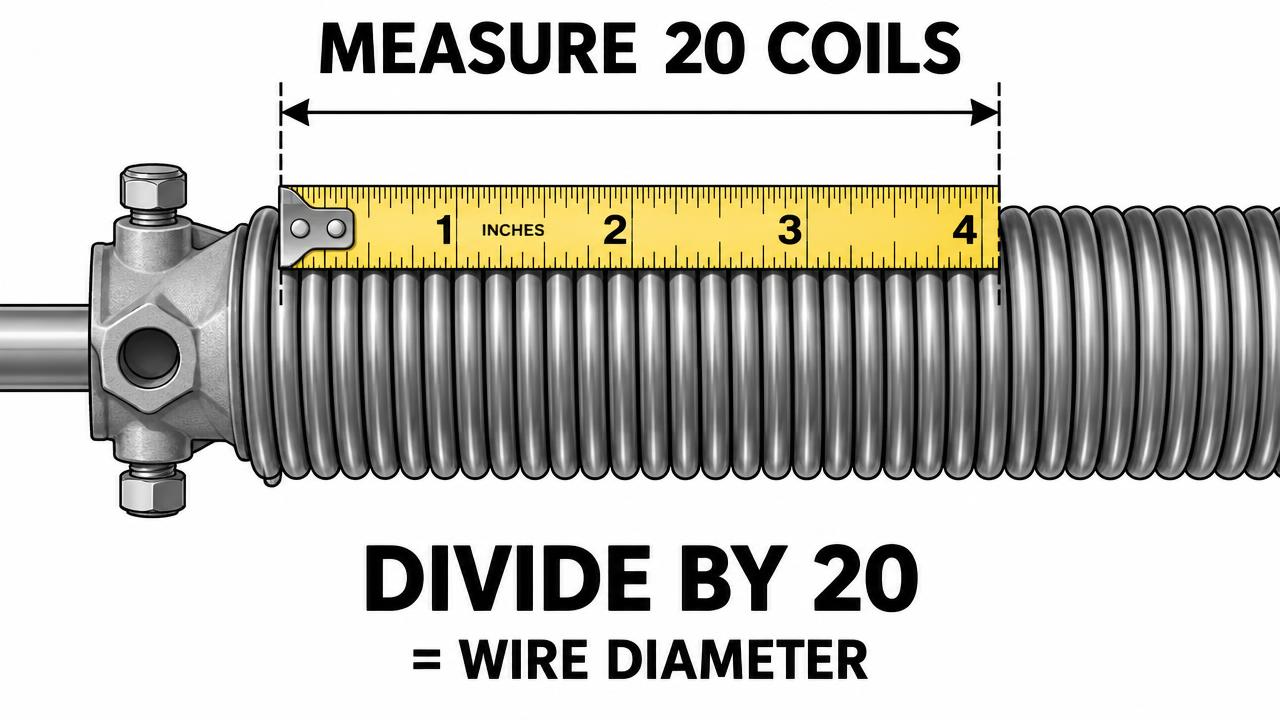
Reference illustration
Step 3
Measure the inside diameter
Measure across the inside of the coil, not the outside, at the end of the spring body where the cone meets it. Common residential sizes are 1.75" and 2.00"; heavy commercial springs are often 2.625", 3.75" or 6.00".
Step 4
Measure the coil length
Measure the coiled body only, from the end of one cone to the start of the other — do not include the cones. For extension springs, measure the relaxed length including the ends and note that separately.
Step 5
Determine the wind direction
Look at the end of the spring. If the last coil exits upward to the left, it is left wind; upward to the right, it is right wind. Two-spring residential doors normally use one of each.
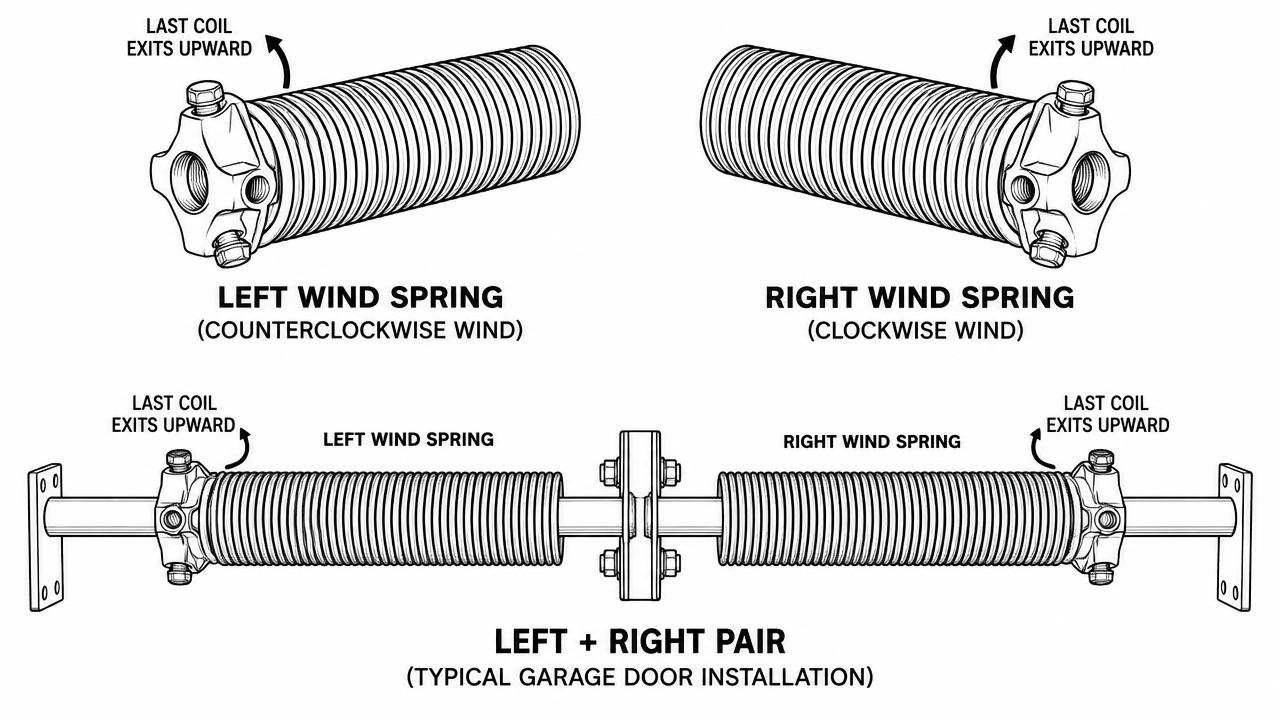
Reference illustration
Step 6
Identify the end configuration
Torsion springs use winding cones and stationary cones. Extension springs use bolt loops, double-loop bolt ends, open hooks, closed eyes, or a custom end.
See cones & end configurationsStep 7
Search the catalog
Enter the dimensions you know in the catalog search or filters, compare reference illustrations, and copy the BCA Reference ID of the closest configuration.